

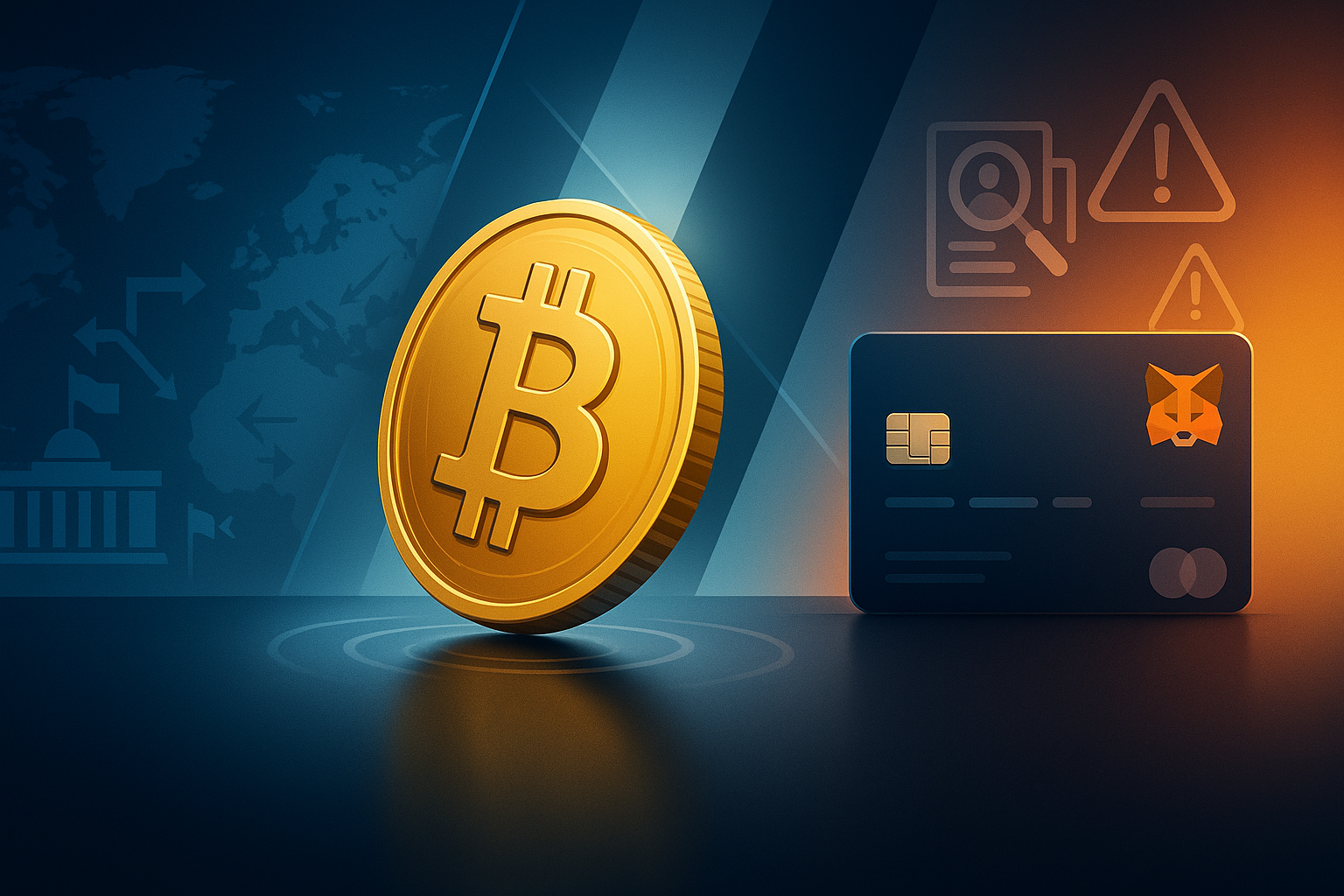
This week in crypto felt like watching three different movies at once: a geopolitical thriller, a courtroom drama, and a fintech launch trailer. Bitcoin flinched on fresh Middle East tensions, a high-flying venture founder was dragged into the spotlight over an alleged mega-fraud, and MetaMask quietly pushed crypto a step closer to your physical wallet.
Bitcoin Takes a Hit as Tensions Flare in Tehran
Bitcoin briefly slipped to around $63,062 after reports of explosive strikes in Tehran, tied to ongoing U.S.-Israel operations and missile-based retaliation from Iran. The market reacted on cue: traders dumped risk, volatility spiked, and social feeds filled with doomsday charts and hot takes.
Yet, as has become almost routine for the orange coin, the dip didn’t last. After the initial shock, BTC clawed its way back, suggesting that macro fear is still a trigger, but not a long-term thesis. Veteran holders have seen this play before—geopolitics rattles nerves, leveraged longs get cleaned out, and the network keeps ticking.
For context, Bitcoin’s relationship with global conflict is complicated. On one hand, it’s often sold off alongside stocks when headlines turn red. On the other, every fresh reminder that governments, banks, and borders are fragile tends to reinforce the narrative of a neutral, uncensorable asset. Short term: volatility. Long term: stronger conviction for those who actually read whitepapers instead of memes.
What This Means for Traders and Builders
- Short-term traders are living and dying by the news cycle. Expect more intraday whiplash as geopolitical risk refuses to leave the stage.
- Long-term holders will likely view this as just another page in Bitcoin’s decade-long scrapbook of crises survived.
- Builders and startups should treat this as a reminder: pricing risk isn’t optional, and political shocks can move your runway, your treasury, and your users’ behavior overnight.
Goliath Ventures CEO Arrested in Alleged $328M Fraud Scheme
While Bitcoin was grappling with missiles and macro, U.S. federal authorities were busy with a different kind of explosion—a legal one. Christopher Alexander Delgado, the founder and CEO of Goliath Ventures, was arrested on allegations tied to a massive $328 million fraud operation.
According to initial filings, Delgado is accused of using the Goliath Ventures brand as a glossy front for what prosecutors describe as a sophisticated, large-scale deception targeting investors. Details are still emerging, but the core allegation is simple: the story sold to investors and the underlying reality may have lived on different planets.
This isn’t the first time a slick pitch deck and big promises have ended in handcuffs, and it won’t be the last. From Theranos to FTX, the pattern keeps repeating: an aggressive growth story, opaque numbers, a cult-of-personality founder, and almost no appetite for uncomfortable questions—until it’s too late.
Red Flags the Market Keeps Ignoring
While the Goliath case will play out in court, there are a few recurring warning signs that investors—crypto-native or not—should stop hand-waving away:
- Returns that ignore gravity: If the promised upside sounds like a cheat code, assume the risk is being hidden, not eliminated.
- Zero transparency: If you can’t clearly see where money is coming from, where it’s going, and who controls it, you’re not investing—you’re donating.
- Cult over competence: When a founder is treated like a prophet instead of an operator, rational scrutiny tends to vanish.
- “Too big to question” vibes: The bigger the claimed numbers, the more boring, detailed documentation you should demand.
Whether you’re backing a seed-stage DeFi protocol or a traditional venture fund, the boring stuff—audits, disclosures, governance, cap tables—is where the real story lives. Hype can be faked; cash flow rarely can.
MetaMask Card Rolls Out Nationwide: Crypto in Your Pocket
On the more constructive side of the week, MetaMask expanded access to its branded card across the country, turning the familiar fox wallet into something you can effectively swipe, tap, or plug into your daily spending.
The idea is straightforward: let users spend crypto from their MetaMask wallet in the real world, without needing to manually bridge funds to a centralized exchange, cash out, and wait. Under the hood, a fiat on-ramp/off-ramp provider typically handles conversion, so merchants still see their usual local currency while you burn through your stablecoins or other supported assets.
Why This Actually Matters
On paper, crypto is supposed to be “money for the internet.” In practice, people mostly treat it as long-term speculation, yield farming collateral, or JPEG ammo. A nationwide card rollout doesn’t magically make crypto a dominant payment method, but it does chip away at the gap between on-chain wealth and offline life.
More importantly, this kind of integration normalizes the experience. For users:
- Less friction: Fewer hoops to jump through to actually spend what you hold.
- More optionality: You choose when to keep assets on-chain and when to liquidate into daily expenses.
- Clearer UX: A card is a mental model people already understand; crypto just becomes the funding rail behind it.
Of course, there are trade-offs. Users should pay attention to conversion fees, tax implications of spending crypto, and how much personal data flows through partners involved in the card stack. Convenience is usually subsidized with either fees, data, or both.
Where the Week Leaves the Crypto Narrative
Put together, this week was a neat snapshot of where the space really is in 2026:
- Still macro-sensitive: Bitcoin reacts to real-world conflict, but recovers faster than many traditional assets, signaling growing maturity.
- Still cleaning house: Alleged frauds like the Goliath Ventures saga show regulators are very much awake—and that investors still need sharper BS-detectors.
- Still building rails: Products like the MetaMask card move crypto from your browser into your actual wallet, even if only a fraction of users adopt it at first.
If you zoom out, the pattern is clear: the asset class is volatile, the enforcement environment is heating up, and the infrastructure is slowly, stubbornly getting better. That tension—between chaos, crackdown, and construction—is exactly where the next cycle’s winners will be forged.
Just don’t confuse motion for progress. Every week will have its own panic, perp walk, and product launch. The real signal isn’t in a single candle or headline—it’s in whether we’re building systems that outlast both.